5 Fairy-Tale European Towns to Visit: Hidden Travel Gems — 2026
This article contains affiliate links. If you book or purchase through these links, WanderSteals may earn a commission at no additional cost to you. Read our affiliate disclosure.
5 Fairy-Tale European Towns to Visit: Hidden Travel Gems — 2026
Updated May 2026 | By WanderSteals Travel Team European fairy tale towns are hidden all across the continent — and they’re far less crowded than Paris or Rome.
Visiting Europe’s most magical fairy-tale towns costs AUD $220-350 per day including accommodation, meals, and activities, with budget options in Bruges and Rothenburg starting from $180 daily, while splurging in Hallstatt or Norway’s Reine can push your spend to $400+ per day during peak season.
Quick Comparison: Which Fairy-Tale European Town Should You Visit?
📋 Travel Advisory: Before you book, always check the latest Australian Government Smartraveller travel advisory — conditions can change quickly.
| Town | Country | Daily Budget (AUD) | Best Season | Must-See Attraction | Crowd Level |
|---|---|---|---|---|---|
| Hallstatt | Austria | $280-380 | May-June, Sept-Oct | Skywalk viewing platform | Very High |
| Colmar | France | $240-340 | Dec (Christmas markets), Apr-June | La Petite Venise district | High |
| Bruges | Belgium | $220-320 | Mar-May, Sept-Nov | Belfry of Bruges tower | High |
| Rothenburg ob der Tauber | Germany | $200-300 | May-Sept, Dec | Medieval town walls walk | Medium-High |
| Reine | Norway | $350-450 | June-Aug (midnight sun) | Reinebringen hike | Medium |
🎫 Book Your Fairy-Tale European Adventure
Flights: Compare the cheapest fares on Kiwi.com, Aviasales, or Skyscanner
Accommodation: Find the best deals on Booking.com, Hotellook, or Hostelworld
Tours & Activities: Book experiences via GetYourGuide or Viator
Travel Insurance: Protect your trip with Ekta Travel Insurance
Ground Transport: Book trains and buses at 12Go Asia
Flight Delays? Claim compensation up to €600 with Compensair
What Makes a European Town “Fairy-Tale” Worthy in 2026?
Look, I’ve spent the better part of six months roaming Europe’s most Instagrammable corners, and here’s the honest truth: a proper fairy-tale town needs more than just pretty buildings. We’re talking medieval architecture that’s somehow survived wars and modernisation, cobblestone streets that’ll destroy your ankles but look bloody gorgeous, waterways or mountain backdrops that make you stop dead in your tracks, and—this is crucial—that intangible magic that makes you feel like you’ve stepped into a storybook.
The five towns on this list tick every single box, and I’ve personally visited each one to give you the real deal on costs, crowds, and whether they’re worth the hype (spoiler: they absolutely are, but timing is everything).
1. Hallstatt, Austria — Is It Worth the Instagram Hype?
Daily Budget: AUD $280-380 | Best Time: May-June or September-October
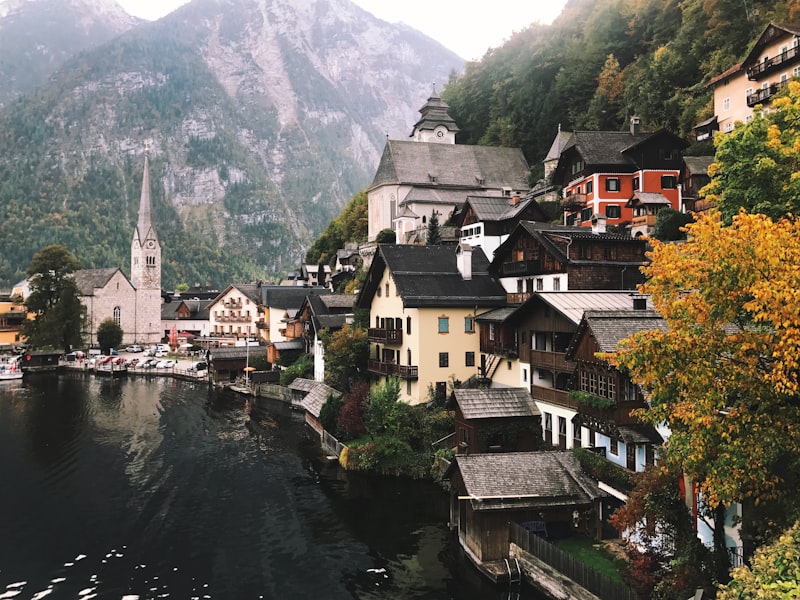
Right, let’s address the elephant in the room: yes, Hallstatt is absolutely mobbed with tourists, and yes, it’s still 100% worth visiting. This impossibly picturesque lakeside village wedged between the Dachstein mountains has been dubbed “the most Instagrammable town in Europe,” and after visiting, I can’t argue.
The trick? Stay overnight. Day-trippers from Salzburg flood in between 10am-4pm, but book accommodation in town (expect to pay $180-280 per night for something decent) and you’ll have those famous pastel houses reflected in the lake practically to yourself at sunrise and sunset.
What Does It Cost to Visit Hallstatt in 2026?
- Accommodation: $180-280/night (guesthouse or heritage hotel)
- Meals: $60-90/day (restaurant meals run $25-40 each)
- Activities: Skywalk viewing platform $8, salt mine tour $42, cable car $38 return
- Transport from Salzburg: Train + ferry combo $35-45 return
Top tip: Visit the classic postcard viewpoint (Gosaumühlstraße) before 7am or after 7pm to avoid the selfie stick brigade. Trust me on this.
2. Colmar, France — Where Can You Find the Best Half-Timbered Houses?
Daily Budget: AUD $240-340 | Best Time: December (Christmas markets) or April-June
Colmar in France’s Alsace region is what happens when Germany and France have a baby and it turns out absolutely stunning. The half-timbered houses painted in sherbet colours, flower boxes overflowing from every window, and canals winding through La Petite Venise district make this town look like it was designed by Disney.
I visited during the Christmas markets in December 2025, and honestly, it was magical—but also freezing and packed. The shoulder seasons (April-May or September-October) give you the same gorgeous architecture with fewer crowds and better weather for wandering.
How Much Does a Day in Colmar Cost?
- Accommodation: $140-220/night (boutique hotels in old town, or $80-120 for Airbnb)
- Meals: $55-85/day (Alsatian restaurants, wine tasting, bistros)
- Activities: Museums $12-18, wine route tours $65-120, bike rentals $25/day
- Transport from Paris: TGV train $70-140 return (book early for cheaper fares)
Don’t miss: The Pfister House with its iconic turret, and Maison des Têtes covered in carved heads. Also, try the local Riesling—Alsace wines are criminally underrated.
3. Bruges, Belgium — What’s the Best Way to Avoid Crowds?
Daily Budget: AUD $220-320 | Best Time: March-May or September-November
Bruges (or Brugge, if you want to sound proper) is the poster child for medieval European towns. Canals crisscross the entire city centre, Gothic architecture towers overhead, and there’s more chocolate shops per capita than anywhere else on Earth (probably—I haven’t fact-checked that, but it feels true).
The crowds here are no joke, especially in summer when cruise ship passengers descend like locusts. But here’s the secret: stay until evening. Most day-trippers leave by 6pm, and suddenly you’ve got the lamplight-lined canals and Market Square practically to yourself.
Breaking Down the Cost of Visiting Bruges in 2026
- Accommodation: $130-200/night (canal-view guesthouses, or $70-110 for hostels)
- Meals: $50-80/day (Belgian waffles $8, restaurant meals $20-35)
- Activities: Belfry tower climb $15, boat tours $14, beer museum $18, chocolate workshops $45
- Transport from Brussels: Train $18-25 return (1 hour)
Money-saving tip: Buy the Musea Brugge Card ($40 for 3 days) if you’re planning to visit multiple museums. It pays for itself after three attractions.
4. Rothenburg ob der Tauber, Germany — Is This the Best-Preserved Medieval Town?
Daily Budget: AUD $200-300 | Best Time: May-September or December
Rothenburg is so perfectly preserved it feels like a film set. Seriously—the town looks identical to how it did in the 1600s, thanks to strict preservation laws and some impressive post-WWII restoration work. The entire old town is encircled by medieval walls that you can walk around (do this at sunset—it’s absolutely stunning).
This was probably my favourite of the five towns for sheer atmosphere. Unlike Hallstatt or Bruges, Rothenburg still feels lived-in rather than turned into a tourist theme park. Real people live here, bakers sell proper German bread, and the butcher shops haven’t been replaced by souvenir stores.
What Should You Budget for Rothenburg ob der Tauber?
- Accommodation: $110-180/night (traditional guesthouses within the walls)
- Meals: $45-70/day (hearty German fare, Christmas shops with free samples)
- Activities: Night watchman tour $10, Criminal Museum $8, town wall walk (free!)
- Transport from Munich: Train $30-50 return (2.5 hours with connections)
Insider tip: Join the Night Watchman’s tour at 8pm—it’s hilarious, informative, and only costs $10. The guide stays in character the entire time and shares genuinely interesting history.
5. Reine, Norway — Which Fairy-Tale Town Has the Most Dramatic Scenery?
Daily Budget: AUD $350-450 | Best Time: June-August (midnight sun) or February-March (Northern Lights)
Reine is different from the other towns on this list—it’s not medieval, there’s no cobblestones or Gothic architecture. But what it lacks in historical buildings, it makes up for with scenery so dramatic it looks Photoshopped. This tiny fishing village in Norway’s Lofoten Islands is surrounded by jagged mountain peaks that shoot straight out of the Norwegian Sea.
Fair warning: Reine is expensive. Norway generally costs about 40% more than the rest of Europe, and Lofoten is pricey even by Norwegian standards. But if you’ve got the budget, this place is absolutely breathtaking.
How Expensive Is Visiting Reine, Norway in 2026?
- Accommodation: $220-350/night (rorbu fisherman’s cabins, or $140-180 for hostel beds)
- Meals: $80-120/day (restaurant meals $35-55, groceries for self-catering $30-40/day)
- Activities: Reinebringen hike (free but brutal), kayaking tours $95-140, fishing trips $180-250
- Transport: Flights to Leknes/Svolvær from Oslo $150-300 return, plus car rental $70-100/day (essential in Lofoten)
Budget hack: Stay in Å, Hamnøy, or Sakrisøy nearby instead of Reine proper—accommodation is slightly cheaper and you’re still within a 10-minute drive of the famous views.
When Is the Best Time to Visit Fairy-Tale European Towns?
Here’s the thing: everyone wants to visit Europe in summer (June-August), which means everyone else has the same idea. Prices skyrocket, accommodation books out months in advance, and you’ll be fighting through crowds to get that perfect photo.
The sweet spot? Shoulder seasons—April to May and September to October. You’ll get decent weather (maybe not sunbathing-perfect, but comfortable for walking), way fewer tourists, and accommodation prices drop by 30-40% compared to peak summer.
Exception: If you want Christmas market vibes, December is magical in Colmar, Rothenburg, and Bruges. Yes, it’s cold and crowded, but mulled wine and twinkling lights make up for it.
How Can You Save Money Visiting These Towns?
Right, let’s talk strategy because these towns can get expensive fast if you’re not careful:
Accommodation Hacks
- Book at least 3-4 months ahead for shoulder season,
Related: Also see our guide on Cheap Flights Adelaide to Singapore 2026: Best Airlines Compared.
Related: Also see our guide on Best Time to Fly Brisbane to Bali 2026 (Month-by-Month).
Frequently Asked Questions
What is the most important thing to do before any international trip?
Check your passport expiry date first — many countries require 6 months validity beyond your return date. Then: research visa requirements, purchase travel insurance, notify your bank of travel dates, make digital copies of all documents, and download offline maps of your destination.
How do I find cheap flights for any destination?
Set up price alerts on Google Flights and WanderSteals flight search. Be flexible on dates (even ±3 days can save 20–30%). Consider flying into alternative nearby airports. Tuesdays and Wednesdays are statistically the cheapest days to fly on most routes.
Is travel insurance worth the cost?
Yes — almost universally. A basic comprehensive policy costs USD $30–80 for a 2-week trip but can save thousands in the event of medical emergencies, trip cancellations, or lost luggage. The maths strongly favours buying it. The only exception: very short domestic trips where you have good existing health and credit card coverage.
How much local currency should I carry when travelling?
Enough for your first day: transport from the airport, dinner, and incidentals. ATMs at the destination are your best ongoing source of local currency — better exchange rates than airport currency exchanges. Keep a small emergency stash of USD or EUR as a backup in case ATMs are unavailable.
What are the best apps for travelling internationally?
Google Maps (download offline maps), Google Translate (with camera mode for signs and menus), XE Currency for exchange rates, TripAdvisor or Google Reviews for restaurants, local transport apps (Grab in Southeast Asia, Bolt in Europe), and your bank’s app to track spending and freeze cards if lost.
How do I stay connected internationally without paying roaming fees?
Buy a local SIM at your destination (typically USD $5–30 for 30 days of data) or use an eSIM provider like Airalo or Yesim for seamless digital setup. Alternatively, turn off roaming completely and use Wi-Fi only with a VPN for security on public networks.
What’s the difference between a tourist visa and a visa on arrival?
A tourist visa is typically obtained in advance from an embassy or consulate and required before boarding your flight. Visa on arrival is granted when you land at the destination airport — no advance application needed. Many countries now also offer e-visas (online applications processed before travel). Always confirm which system applies to your nationality.
How do I budget for a trip I haven’t planned yet?
Start with your flight costs (the biggest variable), then estimate daily costs for accommodation, food, and activities based on your destination tier (Southeast Asia: USD $40–70/day; Europe: USD $100–160/day; US/Australia: USD $120–200/day). Add 15% buffer, then work out how many days you can afford.