
ETIAS 2026 Launch Date, Fee & Requirements: Full Guide
Updated September 2026
✈️ Search Cheap Flights on Aviasales →
🎒 Search Tours & Stays on Klook →
⚡ Quick Answer: ETIAS for Australian Travellers
- Visa required? No standard visa — but ETIAS authorisation IS required from Q4 2026
- ETIAS fee: €20 (approx. AUD $34) per application
- Where to apply: Online via the official EU Travel Information and Authorisation System portal
- Processing time: Up to 96 hours (most approvals within minutes)
- Validity: 3 years or until passport expiry (whichever comes first)
- Stay limit per entry: 90 days within any 180-day period
- Linked to: Entry/Exit System (EES) — now operational across Schengen borders
⚠️ Visa rules change frequently. Always verify at the Australian Government travel advisory before travelling. This guide reflects rules as of September 2026.
—
As of 2026, Australian passport holders do not need a traditional Schengen visa to enter Europe — but they do need ETIAS (European Travel Information and Authorisation System) authorisation starting in Q4 2026. The fee is €20 (approximately AUD $34) per person, the authorisation is valid for 3 years, and applications are submitted entirely online before travel. If you’re flying Sydney to Europe — think fares from AUD $1,050 one-way or AUD $1,950 return on current pricing — you’ll need ETIAS sorted before you board.
ETIAS 2026 Requirements: Summary Table
| Requirement | Details |
|---|---|
| Visa type | ETIAS travel authorisation (not a traditional visa — pre-travel electronic approval) |
| Cost | €20 per adult (approx. AUD $34); free for travellers under 18 and over 70 |
| Where to apply | Official ETIAS website (travel-europe.europa.eu/etias) — no third-party sites needed |
| Processing time | Most approved within minutes; allow up to 96 hours; complex cases up to 30 days |
| Validity | 3 years from issue date, or until your passport expires — whichever is sooner |
| Passport validity required | Must be valid for the entire duration of your stay; no minimum buffer officially, but 6 months recommended |
| Entry limit | 90 days within any rolling 180-day period across all 29 Schengen countries |
| Extension possible? | No — ETIAS cannot be extended; overstaying triggers EES flag and future entry bans |
When Exactly Does ETIAS Launch in 2026?
The official ETIAS launch window is Q4 2026 — meaning October, November, or December 2026. The European Union has confirmed this timeline following the successful operational rollout of the Entry/Exit System (EES) across all 29 Schengen member states in early 2026. A specific go-live date within Q4 has not been pinned publicly as of September 2026, so travellers with bookings from October onwards should have ETIAS ready.
ETIAS was originally legislated in 2016 and has been delayed multiple times — 2021, 2023, and mid-2024 were all missed windows. The Q4 2026 date is now backed by the EES infrastructure being in place, which is the technical prerequisite ETIAS depends on. Don’t count on another delay; book and apply accordingly.
Which Countries Require ETIAS?
ETIAS applies to nationals of 59 visa-exempt countries, including Australia, New Zealand, Canada, the United States, the UK, Japan, and South Korea. It covers all 29 Schengen Area countries: the 27 EU member states plus Norway and Iceland (Switzerland and Liechtenstein are also included). Citizens of countries that currently require a full Schengen visa are unaffected by ETIAS — they continue under existing visa processes.
| Country Group | ETIAS Required? | Notes |
|---|---|---|
| Australia, NZ, Canada, USA | ✅ Yes | Currently visa-free; ETIAS adds pre-authorisation step |
| UK | ✅ Yes | Post-Brexit; UK nationals now in same category as Aussies |
| EU citizens | ❌ No | Full EU passport = free movement, no ETIAS |
| Schengen visa holders | ❌ No | Existing visa covers entry; ETIAS is separate system |
| Under 18 / Over 70 | ✅ Required but free | Must still obtain ETIAS; €0 fee applies |
Step-by-Step: How to Apply for ETIAS
- Check your passport: Your passport must be biometric (ePassport with chip). Australian passports issued after 2005 are biometric. If yours is older, renew before applying — Australia Passport Office processing is currently running 6–8 weeks.
- Go to the official ETIAS portal: Visit travel-europe.europa.eu/etias — this is free to access. Ignore any third-party “ETIAS assistance” sites charging AUD $50–$150 in service fees; they are not affiliated with the EU.
- Complete the online application: You’ll need your passport details, travel plans (first Schengen country you’ll enter), employment information, and answers to health and security screening questions. Allow 10–15 minutes.
- Pay the €20 fee: Payment is by credit or debit card. As of September 2026, €20 converts to approximately AUD $34 at current exchange rates.
- Wait for approval: The vast majority of applications are auto-approved within minutes. If flagged for manual review, it takes up to 96 hours — and in rare cases up to 30 days. Apply at minimum 72 hours before departure; ideally 2 weeks out.
- Download and save your ETIAS: Your authorisation is linked to your passport electronically. You don’t receive a physical stamp or sticker. Airlines will verify it at check-in; border officers verify it at entry via the EES system.
- Reapply when your passport renews: ETIAS is tied to a specific passport. A new passport = a new ETIAS application, even if the 3-year validity hasn’t expired.
The EES and ETIAS Connection: What Changes at the Border
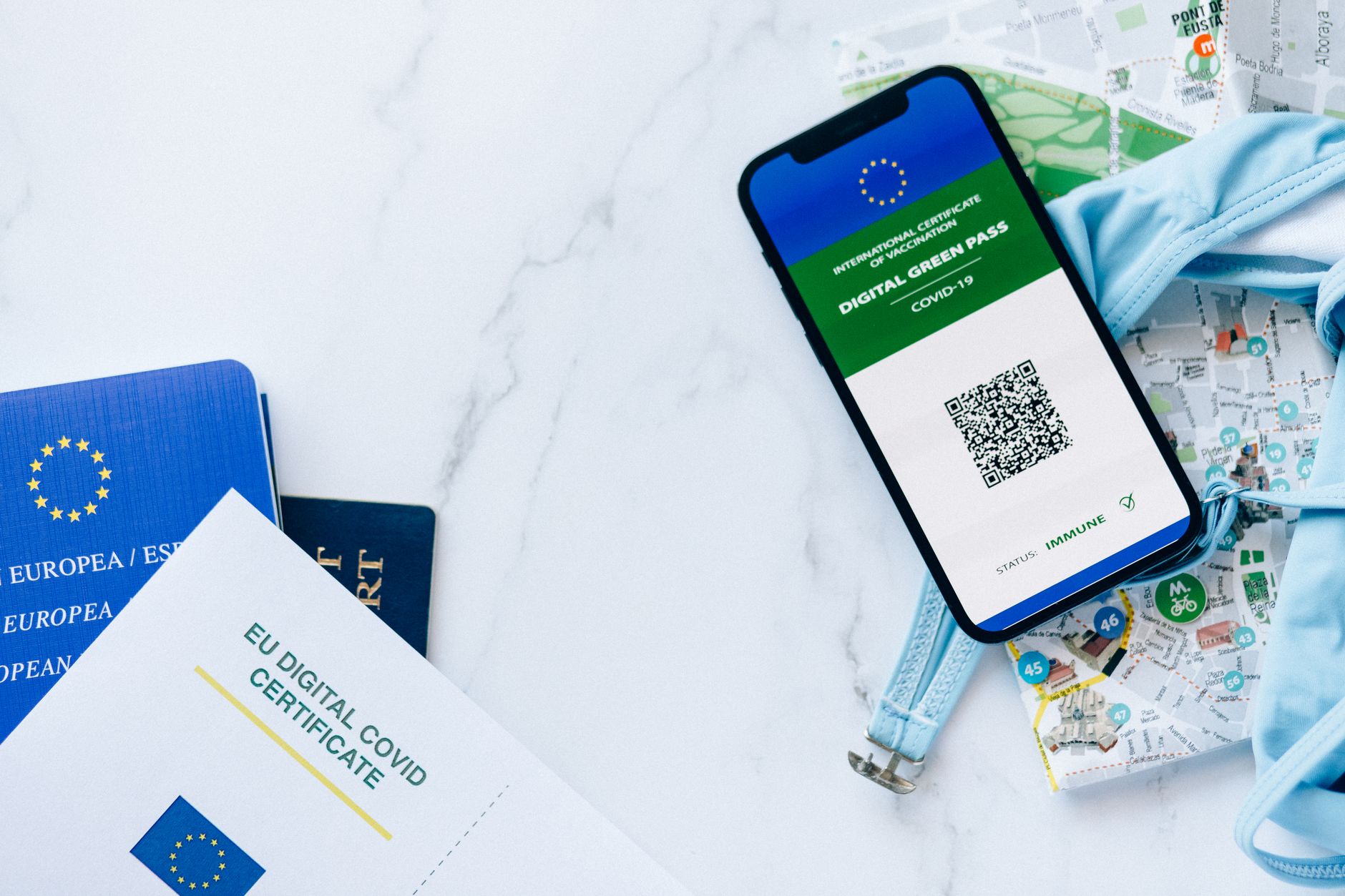
The Entry/Exit System (EES) is the digital passport-stamping replacement that went live across Schengen borders in 2026. Instead of an ink stamp, EES records your fingerprints and facial image at entry and exit — automatically tracking the 90/180-day rule. ETIAS is the pre-screening layer that runs before EES; together, they replace the old manual stamp process entirely.
At the border, expect a self-service kiosk step plus officer verification. Current EES processing at major airports like Amsterdam Schiphol, Paris CDG, and Frankfurt is running at 60–90 seconds per traveller at dedicated kiosks, though queue wait times in peak season can add 20–40 minutes. Build this into your connection time if transiting through a Schengen hub.
Grace Period Rules: What If ETIAS Launches Mid-Trip?
The EU has confirmed a grace period of approximately 6 months after the official ETIAS go-live date, during which Schengen border officers retain discretion to wave through travellers who are unaware of the new requirement. However, airlines are expected to enforce ETIAS verification at check-in from day one of launch — meaning you likely won’t board without it, regardless of the grace period. Do not rely on the grace period as a travel strategy.
Document Checklist for ETIAS
- ✅ Valid Australian biometric passport (issued post-2005; chip symbol on cover)
- ✅ Email address (your ETIAS confirmation is sent here)
- ✅ Credit or debit card for the €20 fee payment
- ✅ Residential address in Australia
- ✅ First Schengen country of entry (can be your first flight destination)
- ✅ Approximate travel dates and intended length of stay
- ✅ Current employment details (employer name and address, or student/retired status)
- ✅ Health declaration (tuberculosis exposure question for certain travellers)
- ✅ Security declaration (criminal record, travel to conflict zones in past 10 years)
- ✅ Emergency contact details
You do not need to show a hotel booking, return flight, or bank statements to apply for ETIAS online — those documents are for border officers if questioned on arrival, not for the application itself.
Common Mistakes Travellers Make with ETIAS
Mistake 1: Using a Third-Party Application Website
Dozens of commercial sites charge AUD $50–$150 to “help” you apply for ETIAS. The official EU portal is free (€20 is the only legitimate charge). Third-party sites don’t speed up processing and some are outright scams. Bookmark travel-europe.europa.eu/etias and use only that.
Mistake 2: Applying With the Wrong Passport
ETIAS is tied to the passport number you apply with. If you renew your Australian passport between applying and travelling — even one week before departure — your ETIAS is void and you must apply again. Renew your passport before submitting ETIAS, not after.
Mistake 3: Ignoring the 90/180-Day Rule
ETIAS validity of 3 years does not mean you can stay in Schengen for 3 years. The hard limit is 90 days within any rolling 180-day window. The EES now tracks this automatically via biometrics — border officers will see your exact entry/exit history, and there’s no margin for “I didn’t realise.”
Mistake 4: Last-Minute Applications
While most ETIAS approvals are instant, a small percentage trigger manual review lasting up to 30 days. Apply at least 2 weeks before your departure date — especially if you have any travel to conflict-zone countries in your history, which triggers additional screening.
Mistake 5: Forgetting ETIAS When You Renew Your Passport
This will catch thousands of Australians in 2027 and beyond. The moment your passport number changes, your ETIAS authorisation linked to the old number is invalid. Add a calendar reminder: “Renew ETIAS” whenever you renew your passport.
Entry and Exit Tips: What to Expect at Schengen Borders
At major Schengen entry points like Amsterdam Schiphol (AMS), Paris Charles de Gaulle (CDG), and Frankfurt (FRA), the EES rollout means you’ll encounter biometric kiosks before reaching a border officer. First-time entrants into EES will have fingerprints and a facial scan registered — this takes 2–3 minutes per person. On subsequent visits, it’s a quick scan match.
Border officers may ask about your accommodation, funds, and return travel. Have handy: your first night’s booking confirmation, a rough itinerary, and proof of onward travel (your return flight from AviaSales works fine as a PDF on your phone). Typical officer interaction is under 2 minutes for prepared travellers.
At exit, EES kiosks in most airports record your departure automatically when you scan out. Missing your EES exit scan (e.g., leaving via a small land border without kiosks) can create a discrepancy in your travel record — flag it proactively at your next Schengen entry if this happens.
Extending Your Stay Beyond 90 Days
ETIAS cannot be extended, and the 90/180-day Schengen rule is a hard ceiling for visa-free Australians. There is no official extension mechanism for ETIAS-level travellers. If you want to spend more than 90 days in Europe, your options are: (1) leave the Schengen Area for a non-Schengen country like Albania, North Macedonia, or the UK for sufficient days to reset your 180-day window, or (2) apply for a long-stay national visa (D-visa) from a specific Schengen country before travel.
Digital nomads and long-term travellers should research country-specific digital nomad visas — Portugal, Greece, and Spain all have programmes for stays of 12+ months that sit outside the ETIAS/90-day framework. Processing for these visas is done via the relevant country’s consulate in Australia and takes 4–12 weeks depending on the country.
Book Your Trip to Europe: Current Sydney Deals
Sydney (SYD) to Europe return fares are currently tracking at AUD $1,950–$2,800 return on major carriers including Singapore Airlines, Emirates, and Qatar Airways. One-way fares from AUD $1,050 are available on flexible dates. Multi-city routes (e.g., Sydney → London → Paris → Rome → Sydney) can actually undercut standard return fares — use Kiwi.com’s flexible search to find these combinations.
Search Sydney → Europe Flights →
Find Multi-City Europe Routes →
For travel insurance — which you absolutely need given EES border complexity and potential ETIAS application issues causing missed departures — get a quote below. Ekta offers solid comprehensive cover for Australian travellers at competitive rates, with 25% commission going back to support free guides like this one.
Staying connected in Europe without paying Telstra or Optus roaming rates (AUD $10–$15/day) is easy with an eSIM. Yesim gives you data-only eSIM access across all 29 Schengen countries, activated before you leave Sydney.
For airport transfers on arrival — especially with EES queues adding unpredictable time to border crossing — pre-booked transfers beat taxi queues. Welcome Pickups covers all major Schengen airports with fixed AUD pricing confirmed at booking.
Book Airport Transfer in Europe →
For day tours, museum entry, and skip-the-line tickets across Europe, Tiqets has solid pricing on major attractions — Louvre, Colosseum, Sagrada Família — with instant mobile confirmation that satisfies any “proof of itinerary” questions at the border.
Book Europe Tours & Attractions →
Don’t Forget: Complete Your Trip
Before you book, lock in these essentials through our trusted partners:
- ✈️ Flights:
Aviasales ·
Kiwi.com - 🏨 Accommodation & tours:
Klook ·
Tiqets - 🚗 Car hire & transfers:
QEEQ ·
Localrent ·
KiwiTaxi - 🛡️ Travel insurance:
EKTA Travel Insurance (25% off) - ✅ Flight issues?
Compensair ·
AirHelp — claim up to €600 (no-win no-fee)
Frequently Asked Questions
When does ETIAS start — what is the exact 2026 launch date?
ETIAS is officially launching in Q4 2026, meaning between October and December 2026. As of September 2026, the EU has not announced a specific day within Q4. The launch follows the successful operational rollout of the Entry/Exit System (EES) across all 29 Schengen member states earlier in 2026. Travellers with European departures from October 2026 onwards should apply for ETIAS as soon as the portal opens — applications may begin a few weeks before the enforcement date.
How much does ETIAS cost in Australian dollars?
ETIAS costs €20 per adult applicant, which is approximately AUD $34 at September 2026 exchange rates (AUD/EUR ≈ 0.59). Travellers under 18 years old or over 70 years old are exempt from the fee and apply for free — but they still must obtain ETIAS before travel. The fee is non-refundable even if your application is refused.
Do Australians need ETIAS to visit Europe in 2026?
Yes — Australian passport holders will need ETIAS to enter any of the 29 Schengen Area countries once it launches in Q4 2026. Australia is one of 59 nationalities affected. Australians were previously able to enter Schengen visa-free with just a passport; ETIAS adds a mandatory pre-travel electronic authorisation step costing €20 (about AUD $34). It is not a visa — it’s an online pre-screening approval valid for 3 years.
How long is ETIAS valid for and how many times can I use it?
ETIAS is valid for 3 years from the date of issue, or until your passport expires — whichever comes first. Within that 3-year window, you can make multiple trips to the Schengen Area. However, each trip is still subject to the 90/180-day rule: you cannot spend more than 90 days in the Schengen Zone within any rolling 180-day period. ETIAS validity ≠ unlimited stay.
Which countries are covered by ETIAS — is the UK included?
ETIAS covers all 29 Schengen Area countries: the 27 EU member states plus Norway, Iceland, Switzerland, and Liechtenstein. The UK is NOT a Schengen member and does not participate in ETIAS — you still enter the UK with just your Australian passport (for stays up to 6 months under the Electronic Travel Authorisation system). However, UK citizens visiting Schengen countries DO need ETIAS, as the UK is one of the 59 affected nationalities post-Brexit.
What is the difference between ETIAS and EES?
ETIAS (European Travel Information and Authorisation System) is the pre-travel online screening that you complete at home before flying — it costs €20 and takes 10–15 minutes to apply. EES (Entry/Exit System) is the automated digital border system that replaces passport stamps at the physical Schengen border — it records your fingerprints, photo, and travel dates each time you enter or exit. Both systems launched in 2026, and they work together: ETIAS screens you before travel; EES tracks your actual movements at the border.
What happens if I travel to Europe before applying for ETIAS?
Once ETIAS enforcement is active, airlines are required to verify ETIAS authorisation at check-in — meaning you may be denied boarding in Sydney before you even reach Europe. The EU has confirmed a grace period of approximately 6 months post-launch where border officers have discretion, but airlines are expected to enforce from day one. The practical risk is being denied boarding, not just turned away at the European border. Apply before you fly.
Can I apply for ETIAS on the same day I fly to Europe?
Technically, most ETIAS applications are approved within minutes — so same-day applications are possible. However, approximately 4% of applications are flagged for manual review, which can take up to 96 hours, and complex cases can take up to 30 days. Applying same-day is a serious risk. The EU recommends applying at least 72 hours before departure; WanderSteals recommends applying 2 weeks before to give yourself buffer time, especially for first-time applicants or those with complex travel histories.
🏆 WanderSteals Verdict: ETIAS 2026
ETIAS is not a visa and it’s not a big deal — it’s a €20, 10-minute online form with 3-year validity. The actual disruption risk is leaving it too late or applying with the wrong passport. Australians flying to Europe from Q4 2026 need to treat ETIAS like checking in online: do it well before the airport, not at it. Flights from Sydney are running AUD $1,950–$2,800 return right now — lock in your fare, sort your ETIAS as soon as the portal opens, grab travel insurance and an eSIM, and Europe is straightforward. The 90/180-day rule is the only thing that genuinely trips people up; understand it before you book a 3-month adventure.
“`html
Can I travel to multiple Schengen countries with one visa as an Australian?
Yes, a single Schengen visa allows you to travel freely between all 27 Schengen member countries without additional border controls. However, you must apply through the country where you’ll spend the most time, or your first entry point if stays are equal. This makes it excellent value for Australian budget travellers planning multi-country trips.
How long can Australian tourists stay in the Schengen Area?
Australian citizens can stay visa-free in the Schengen Area for up to 90 days within any 180-day period. This means you can spend roughly 3 months exploring multiple countries without applying for a visa, though you must not exceed this limit or face fines and entry bans.
What’s the cheapest way to travel between Schengen countries on a budget?
Budget airlines like Ryanair, EasyJet, and Wizz Air offer extremely cheap flights between Schengen countries, often under €30. Alternatively, buses (FlixBus), trains with discount passes (Eurail), and ride-sharing are cost-effective options. Night trains and buses save on accommodation costs while travelling.
Do I need travel insurance for the Schengen Area as an Australian?
While not legally required for entry, travel insurance is highly recommended for Australian visitors. Schengen countries require proof of medical insurance (minimum €30,000 coverage) for visa applications, and it protects you against unexpected medical costs, flight cancellations, and theft—crucial for budget travellers.
“`